
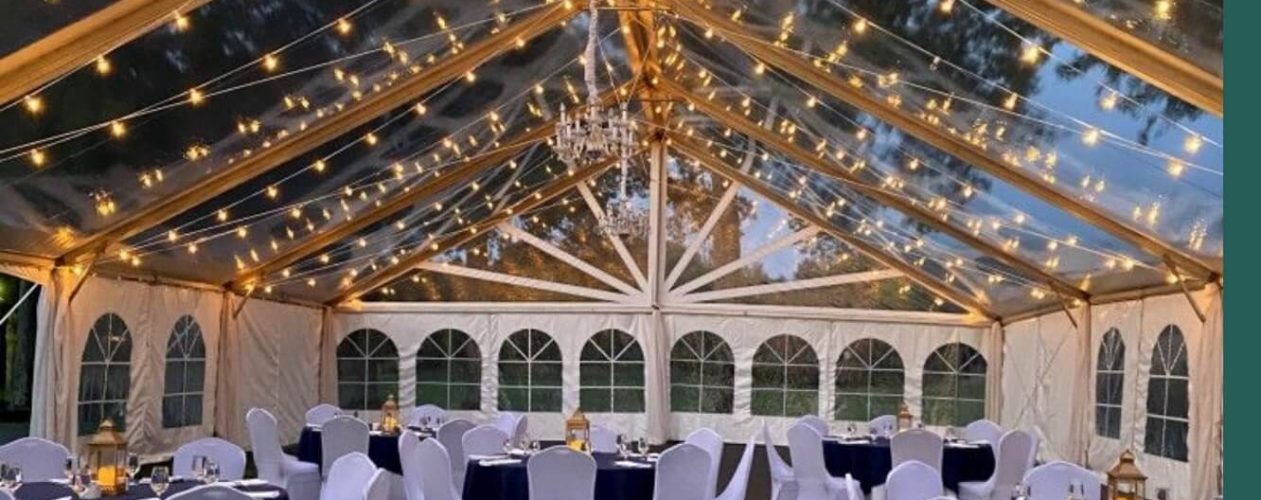
Get this wrong and you’ll either have guests bumping elbows all night or a marquee that feels half empty. Neither is great.
The good news is that working out the right size isn’t complicated. It mostly comes down to three things: how many guests, what they’ll be doing, and what else needs to fit inside.
Start with Guest Numbers
This is your starting point. The number of people coming determines the floor space you need, and everything else builds from there.
Here’s a quick reference:
| Guests | Seated Dining | Standing Reception |
| 20–30 | 4m x 6m | 3m x 6m |
| 30–50 | 6m x 6m | 4m x 6m |
| 50–80 | 6m x 9m | 6m x 6m |
| 80–120 | 9m x 12m | 6m x 9m |
| 120–200 | 12m x 18m | 9m x 12m |
| 200+ | Custom / multi-span | 12m x 15m+ |
The rule of thumb: seated dining needs about 1.5 square metres per person. Standing receptions need roughly 1 square metre. But these are minimums — if you want it to feel comfortable rather than packed, round up.
What Kind of Event Are You Running?
Guest numbers get you in the right ballpark. The type of event narrows it down.
Seated Dinner or Wedding Breakfast
This is the most space-hungry layout. Round tables, chairs, gaps for servers to move between tables, a top table or sweetheart table, maybe a cake table. A 100-guest seated wedding typically needs a 9m x 15m marquee or larger.
Don’t forget that tables aren’t the only thing taking up floor space. You need room for people to pull their chairs out, for staff to serve food, and for guests to get to the bar or toilets without squeezing past every table.
Standing Reception or Drinks Party
Cocktail parties, networking events, and informal celebrations need less space per person. You can comfortably fit 20–30% more guests into the same marquee compared to a seated layout.
But you’ll still need room for a bar, maybe some high tables, and space near the entrance so it doesn’t bottleneck.
Mixed Layout (Dinner Then Dancing)
Most weddings and parties work this way — seated dinner followed by dancing. You’ll need the full seated space plus a dance floor area. Some people clear tables to create the dance floor. Others prefer a separate zone so guests can choose.
If you want a dedicated dance floor, add about 3m x 3m as a minimum (that’s tight) or 4m x 4m for something more comfortable.
What Else Needs to Fit Inside?
This is where people underestimate. The marquee isn’t just for guests and tables. Think about what else is going in there:
Dance floor — 3m x 3m to 5m x 5m depending on how seriously your guests take dancing.
Bar area — usually 2m x 3m minimum, more if it’s a focal point.
DJ or band — a DJ needs about 2m x 2m. A full band could need 3m x 4m or more.
Buffet or catering station — 2m x 3m depending on the setup.
Photo booth, lounge area, or chill-out zone — nice to have, but they eat into your floor space.
Add all of this up and a 100-person wedding that “only” needs a 9m x 12m marquee on paper might actually need a 9m x 15m or 12m x 15m once everything is inside.
Worked Example: 100-Guest Wedding
Here’s how the space might break down for a typical seated wedding with a dance floor and bar:
| Feature | Space Needed |
| Dining area (10 round tables of 10) | Approx. 100 sq m |
| Dance floor | 4m x 4m (16 sq m) |
| Bar area | 2m x 3m (6 sq m) |
| DJ setup | 2m x 3m (6 sq m) |
| Walkways and circulation | 15–20 sq m |
| Total space needed | Approx. 145 sq m |
That works out to roughly a 9m x 15m marquee (135 sq m) at a squeeze, or a 12m x 15m (180 sq m) if you want it to feel spacious. Most people go with the bigger option and don’t regret it.
Check Your Actual Space First
This sounds obvious, but measure your garden or venue before you get attached to a particular marquee size. London gardens especially can be smaller than you’d think, and there are a few things to watch for:
Guy ropes and pegging: Traditional pole marquees need about 1.5–2m of clearance around all sides for guy ropes. Frame marquees and stretch tents don’t.
Access: Can the delivery vehicle get to where the marquee is going? Through a side gate? Down a shared driveway? This affects what’s possible.
Trees and obstacles: Overhanging branches, garden sheds, fences — they all reduce usable space.
Ground conditions: Grass is ideal. Paving and concrete work but need weighted anchoring instead of ground stakes. Sloped ground may need levelling or raised flooring.
We’ll do a site visit before confirming any setup, so you don’t need to figure all of this out yourself. But having a rough measurement of your space saves time.
Common Mistakes People Make
Going too small to save money. A cramped marquee doesn’t save your event — it ruins it. Guests notice when there’s no room to move.
Forgetting about non-seating space. The dance floor, bar, DJ, buffet, and walkways can easily take up 30–40% of the total floor area.
Not measuring the garden. A 12m x 18m marquee sounds fine until you realise your garden is 10m wide. Measure first.
Ignoring access. If the only way in is through the house, that changes what’s feasible. Let your supplier know upfront.
Not Sure? Just Ask.
If you’re not confident about what size you need, that’s completely normal. Send us your guest numbers, a rough idea of the layout you want, and the location — we’ll tell you exactly what fits.
We do this every week. It takes five minutes and saves you from booking something that’s too big, too small, or won’t fit in your garden.